1. What Is the Difference Between Drug Transportation and Possession in Taiwan?
Under Taiwan's Narcotics Hazard Prevention Act, drug transportation and drug possession are separate criminal offenses. Although both may involve physically holding controlled substances, the legal distinction depends on the nature and circumstances of the conduct.
1.1 Legal Meaning of Drug Transportation
Drug transportation generally involves intentionally moving or conveying narcotics from one location to another.
It may occur through international shipping, air travel, maritime transportation, or movement between locations within Taiwan. The use of a professional delivery service is not required. A person who personally drives a vehicle carrying narcotics may also commit transportation if the relevant legal elements are established. The defendant's motive, the distance traveled, the quantity of drugs, and the overall circumstances may all be relevant to the court's assessment.
1.2 When Carrying Drugs May Remain Possession
Not every movement of drugs constitutes the separate offense of transportation.
For example, purchasing a small quantity of narcotics near one's residence and carrying it home may, depending on the circumstances, remain within the scope of possession. Courts must evaluate whether the conduct goes beyond the ordinary movement associated with possession and demonstrates the legally relevant characteristics of transportation.
⚠️Distance and quantity are important considerations, but neither should be treated as an automatic or exclusive test.
2. Can Transporting Drugs for Personal Use Still Be a Crime?
Yes. A claim that drugs were intended exclusively for personal consumption does not automatically prevent a transportation charge. The central question is whether the prosecution can establish the objective and subjective elements of transporting narcotics.
2.1 Why Personal Use Does Not Automatically Exclude Transportation
A defendant may argue that the drugs were not intended for resale or delivery to another person. However, an intention to sell drugs is not a necessary element of every drug transportation offense.
If the evidence establishes that the defendant knowingly transported narcotics over a substantial distance, the offense may still be established even when the ultimate purpose was personal use. Personal consumption may nevertheless remain relevant to the evaluation of criminal circumstances and possible statutory sentence reductions.
2.2 The Kaohsiung-to-Taoyuan Heroin Case
According to the case account discussed here, the defendant carried more than 216 grams of heroin by car from Kaohsiung to Taoyuan. The defendant acknowledged the movement of the drugs but maintained that they were intended for personal consumption.The substantial quantity and long-distance movement were significant circumstances in assessing whether the conduct constituted transportation rather than ordinary possession.
➙The case also raised a separate issue: whether acknowledging the movement of the heroin while disputing the legal characterization of that conduct could satisfy the statutory confession requirement. These two questions must be analyzed independently.
3. What Are the Penalties for Transporting Category 1 Narcotics?
Article 4, Paragraph 1 of Taiwan's Narcotics Hazard Prevention Act provides that manufacturing, transporting, or selling Category 1 narcotics is punishable by death or life imprisonment. Where life imprisonment is imposed, an additional fine of up to NT$30 million may be imposed.
Heroin is classified as a Category 1 narcotic. By comparison, Article 11 establishes separate penalties for possession of Category 1 narcotics, with different provisions applying to possession involving larger quantities. The sentencing difference makes accurate legal classification particularly important.
➙However, the statutory penalty is only the starting point. Courts must also consider applicable sentence-reduction provisions, the established facts, and the legal requirements governing the final sentence.
4. What Counts as a Confession Under Taiwan Drug Laws?
A confession can significantly affect sentencing in certain drug-related criminal cases. However, admitting physical conduct and admitting the essential facts of a criminal offense are not always identical.
4.1 Article 17, Paragraph 2: Confession-Based Sentence Reduction
Article 17, Paragraph 2 of the Narcotics Hazard Prevention Act provides a mandatory sentence reduction for defendants convicted of offenses under Articles 4 through 8 who confess during the investigation and at every applicable fact-finding trial stage.
The provision encourages defendants to acknowledge criminal conduct and supports the efficient resolution of criminal proceedings. A qualifying confession generally requires an affirmative admission of all or the essential parts of the facts constituting the offense. This may include relevant subjective elements, such as knowledge and criminal intent.
💡Accordingly, merely admitting that a package or vehicle was moved may not be sufficient if the defendant simultaneously denies knowing that narcotics were involved.
4.2 Admitting Criminal Facts Versus Disputing Legal Classification
A defendant may admit the relevant facts while disagreeing with how those facts should be legally classified.
For example, a defendant might acknowledge knowingly placing heroin in a vehicle and driving it from Kaohsiung to Taoyuan, while arguing that the conduct should be treated as possession because the drugs were intended for personal use. A disagreement about legal classification does not necessarily invalidate an otherwise qualifying confession.
However, this principle has an important limitation: a defendant must still admit the essential facts required for the offense, including the relevant subjective elements. If the defendant denies knowing that the substance was heroin or denies other essential elements of criminal intent, the statement may not satisfy Article 17, Paragraph 2. The court must examine the defendant's actual statements in context rather than relying solely on whether the defendant verbally accepted or rejected the prosecutor's chosen charge.
5. Why Did the Supreme Court Vacate and Remand the Case?
The case account describes a dispute over whether the lower court correctly evaluated the defendant's statements when deciding eligibility for confession-based sentence reduction.
The central issue was not simply whether the defendant used the word “transportation,” but what criminal facts the defendant had actually admitted.
5.1 The Lower Court's Reasoning
The lower court, identified as the Taichung Branch of the Taiwan High Court, considered the defendant's claim that the heroin was intended for personal use. It treated that position as inconsistent with admitting the criminal intent required for drug transportation and declined to apply the confession-based sentence reduction.
However, a personal-use argument does not necessarily amount to a denial that the defendant knowingly transported narcotics. The distinction depends on the precise content of the defendant's statements.
5.2 The Supreme Court's Concerns About the Evidence
According to the case account, the defendant had acknowledged during earlier proceedings that the heroin was placed in a vehicle and transported from Kaohsiung to Taoyuan.
The Supreme Court questioned whether the lower court had adequately distinguished those factual admissions from the defendant's argument about the legal classification of the conduct. It also identified concerns about the treatment of potentially favorable evidence and the sufficiency of the lower court's reasoning. The judgment was reportedly vacated and remanded for further proceedings.A remand does not mean that the defendant has been acquitted or automatically qualifies for sentence reduction. The lower court must reconsider the relevant issues under the applicable legal standards.
The analysis also reflects Article 154 of Taiwan's Code of Criminal Procedure, which requires criminal facts to be established through evidence.
6. Can Personal Use or Other Circumstances Reduce a Drug Transportation Sentence?
Taiwan's Narcotics Hazard Prevention Act provides several distinct mechanisms that may affect sentencing. Their legal requirements should not be confused.
6.1 Personal-Use Transportation Under Article 17, Paragraph 3
Article 17, Paragraph 3 specifically addresses defendants who commit drug transportation offenses under Article 4 for their own personal use. Where the offense was committed for personal consumption and the circumstances are minor, the court may reduce the sentence. This provision is particularly relevant because it recognizes that transportation for personal use may still constitute a transportation offense while allowing limited sentencing flexibility.
However, personal use alone is insufficient. The court must also find that the circumstances are minor. A large quantity of heroin or extensive transportation activity may make that requirement difficult to establish. Unlike the mandatory reduction under Article 17, Paragraph 2 when its conditions are met, the reduction under Paragraph 3 is discretionary.
6.2 Other Possible Statutory Mitigation
Article 17, Paragraph 1 may provide a reduction or exemption where a defendant identifies the source of narcotics and that information leads to the apprehension of another principal offender or accomplice, subject to the statutory requirements.
Article 59 of Taiwan's Criminal Code may also permit discretionary mitigation when the circumstances of the offense are sufficiently sympathetic and even the statutory minimum sentence would be excessively severe. These provisions have different legal purposes and requirements.
🚨A defendant should not assume that a confession, a personal-use explanation, or cooperation with investigators automatically guarantees a reduced sentence.
7. How Should Defendants Respond to Drug Transportation Charges?
Drug transportation allegations require careful attention from the earliest investigation stage because statements made during police questioning and prosecutorial interviews may later affect both conviction and sentencing.
First
Defendants should understand that claiming personal use does not automatically exclude a transportation offense. The court will examine the quantity, distance, movement, knowledge, and other relevant circumstances.
Second
Defendants should distinguish factual admissions from legal arguments. It is possible to dispute a legal classification without necessarily denying the underlying criminal facts, but the precise wording and context of each statement matter.
Third
Defendants should not assume that admitting only the physical movement of drugs automatically satisfies the confession requirement. Knowledge and other subjective elements may be decisive.
Fourth
Legal counsel should assess the possible application of Article 17, Paragraphs 1, 2, and 3, as well as other relevant sentencing provisions.
Chien Sheng International Law Firm provides criminal defense assistance in Taipei, Taoyuan, Kaohsiung, and throughout Taiwan. Its services include reviewing investigation records, assessing drug transportation and possession charges, and evaluating legally available sentencing arguments.
8. Frequently Asked Questions About Drug Transportation and Confession
Q1: Is transporting heroin for personal use illegal in Taiwan?
Yes. Transporting heroin for personal consumption may still constitute drug transportation if the required legal elements are established. Personal use does not automatically reduce the offense to possession.
Q2: What is the difference between drug transportation and possession?
Drug transportation involves the legally relevant movement or conveyance of narcotics, while possession concerns control over the drugs. Courts examine the circumstances, including quantity, distance, and the nature of the movement, to determine the correct classification.
Q3: What is the penalty for transporting Category 1 narcotics?
Under Article 4, Paragraph 1 of the Narcotics Hazard Prevention Act, transporting Category 1 narcotics carries a statutory penalty of death or life imprisonment, subject to applicable legal and constitutional requirements and any lawful sentencing reductions.
Q4: Does admitting that I carried drugs count as a confession?
Not necessarily. A qualifying confession must cover all or the essential parts of the criminal facts, including relevant knowledge and intent. The complete statement must be evaluated in context.
Q5: Can I dispute a drug transportation charge and still receive a confession-based sentence reduction?
Possibly. Disputing the legal classification of admitted criminal facts does not automatically prevent a qualifying confession. However, denying essential elements of the offense may affect eligibility.
Q6: When does Article 17, Paragraph 2 apply?
It applies to qualifying offenses under Articles 4 through 8 when the defendant confesses during the investigation and at every applicable fact-finding trial stage. The precise requirements must be assessed against the procedural record.
Q7: Can a defendant receive a reduced sentence for transporting drugs for personal use?
Potentially. Article 17, Paragraph 3 allows discretionary mitigation when transportation was for the defendant's own use and the circumstances were minor. Both requirements must be satisfied.
Q8: Does a Supreme Court remand mean the defendant is innocent?
No. Vacating and remanding a judgment means the case must undergo further proceedings in accordance with the higher court's ruling. It does not automatically establish innocence or guarantee a particular sentence.
9. Conclusion: Criminal Facts and Legal Classification Must Be Examined Separately
The distinction between drug transportation and possession can dramatically affect criminal liability in Taiwan. A defendant's claim that heroin was intended for personal use does not automatically exclude transportation, particularly where substantial quantities are moved over significant distances. At the same time, a defendant who admits the essential criminal facts may still be entitled to dispute the legal classification of those facts.
For confession-based sentence reduction under Article 17, Paragraph 2, the decisive issue is whether the defendant has admitted the required criminal facts during the relevant procedural stages, not simply whether the defendant accepts the prosecution's legal terminology. Personal-use transportation may also raise a separate sentencing question under Article 17, Paragraph 3, but mitigation requires more than an assertion of personal consumption.
Anyone facing serious drug transportation charges should obtain legal advice promptly to evaluate the evidence, preserve procedural rights, and assess all applicable sentencing provisions. Chien Sheng International Law Firm assists clients with narcotics investigations, criminal defense, and sentencing issues in Taipei, Taoyuan, Kaohsiung, and other locations throughout Taiwan.
🧑🏻⚖️Chien Sheng International Law Firm provides criminal defense assistance in Taipei, Taoyuan, Kaohsiung, and throughout Taiwan, including cases involving controlled prescription medications, narcotics offenses, and disputed criminal liability.
【CHIEN SHENG LAW FIRM】
- LINE Online Legal Consultation::@lawuicc001(Click to Consult)
- Appointment by Phone::(03)⠀3150-034
- Payment Methods: Cash|Credit Card|Bank Transfer
【Learn More】

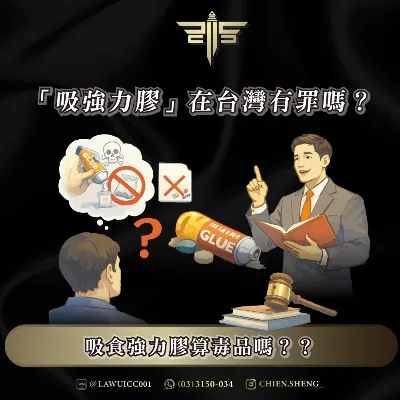 吸強力膠有罪嗎?吸食強力膠算毒品嗎?從社會秩序維護法到刑事責任一次看懂|刑事律師解析吸強力膠不等於施用毒品罪,因強力膠及甲苯並未列入毒品分級名單;但單純吸食仍可能依《社會秩序維護法》裁罰,若吸食後衍生傷害、公共危險、妨害公務等行為,更可能面臨刑事責任。毒品案件知識文 2026.06.09
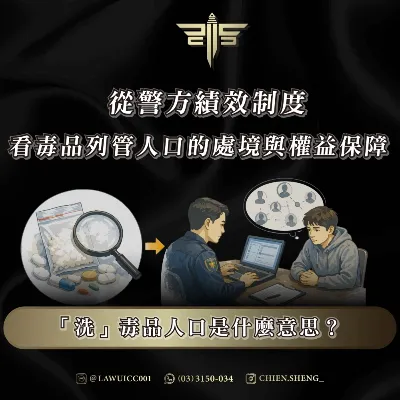 「洗毒品人口」是什麼?毒品列管期間會被驗尿多久?解析警方採驗程序、權益與救濟方式「洗毒品人口」不是法律名詞,卻是毒品案件實務中常被提及的現象。曾有施用毒品紀錄,就能被警方反覆要求驗尿嗎?本文從毒品列管、應受尿液採驗人到警方採驗程序,解析列管期間、強制採尿、驗尿陽性及違法採驗的救濟方式,帶您掌握毒品案件中容易被忽略的程序權益。毒品案件知識文 2026.08.19
 持有K他命一定只是罰錢嗎?第三級毒品持有、意圖販賣而持有與販賣刑責一次看懂|毒品案件律師解析持有K他命不一定只是罰錢!若第三級毒品純質淨重達5公克以上,可能進入刑事程序;若再被認定有「意圖販賣」,更可能面臨3年以上10年以下有期徒刑。本文解析K他命持有、意圖販賣而持有與販賣毒品的差異,以及毒品案件律師如何協助爭取有利結果。毒品案件知識文 2026.06.08
 拒絕採尿會被強制導尿嗎?非侵入性驗尿程序|謙聖律師被告拒絕採尿,警方可以要求、等待及監看自然排尿,但不能直接以導尿管強制取尿。本文完整解析非侵入性採尿程序、等待界線、違法取證與證據能力。毒品案件知識文 2026.08.06