1. What Happens If a Foreigner Is Accused of a Crime in Taiwan?
Foreign nationals may become involved in criminal investigations for various reasons, including allegations of fraud, assault, drug offenses, financial crimes, traffic-related offenses, or other violations of Taiwanese criminal law. The legal process depends on the alleged offense, the available evidence, and the person's procedural status.
1.1 Understanding Your Legal Status
A person contacted by the police may be a witness, suspect, or defendant, depending on the circumstances. Receiving a police notice or summons does not automatically mean that a prosecutor has filed formal charges. Likewise, being questioned does not establish guilt. However, statements made during an investigation may later become important evidence in criminal proceedings.
➠Before answering substantive questions, foreign nationals should clarify why they have been summoned and what allegations are being investigated.
1.2 Why Early Legal Assistance Matters
The early investigation stage is often critical because police and prosecutors may collect statements, digital records, financial information, and other evidence that shapes the case. A misunderstanding caused by inaccurate translation or unfamiliar legal terminology may create inconsistencies that are difficult to explain later. An experienced criminal defense lawyer can help clarify the allegations, explain procedural rights, and evaluate the evidence before important decisions are made.
2. Police Investigation in Taiwan: What to Expect
Police investigations are often the first stage of a criminal case in Taiwan. The police may receive a complaint, investigate suspected criminal activity, collect evidence, and question relevant individuals.
2.1 Police Summons, Questioning, and Statements
A foreign national may receive a police summons requesting attendance at a police station. During questioning, officers may ask about the alleged incident, relationships with other individuals, financial transactions, communications, or other relevant circumstances. Police may prepare an official interview record reflecting the person's statements.
Before signing or confirming the record, the individual should ensure that the contents accurately reflect what was said. If the record is written in Chinese and the person cannot read Chinese adequately, interpretation or translation assistance should be requested.
🚨A person should not sign a statement merely because an officer says it is a routine formality.
2.2 Your Rights During Police Questioning
Under Taiwan's Code of Criminal Procedure, suspects and defendants have important procedural protections.These include the right to remain silent, the right to legal assistance, and the right to understand the allegations and relevant procedural information.
Article 95 of the Code of Criminal Procedure requires specified rights and matters to be communicated before questioning an accused person. Where language barriers prevent meaningful understanding, appropriate interpretation should be arranged. A foreign national should not rely solely on automated translation tools to understand complex legal questions or official statements.
➠If an individual wishes to consult a lawyer, that request should be clearly communicated.The precise procedures and any applicable exceptions depend on the person's legal status and the circumstances of the investigation.
3. Prosecutor Investigation: Indictment, Non-Prosecution, and Deferred Prosecution
After police investigation, a criminal case may be referred to the competent District Prosecutors Office. The prosecutor directs the investigation and determines whether the evidence supports prosecution.
3.1 How Prosecutors Evaluate Criminal Cases
Prosecutors may summon suspects, question witnesses, request documents, review forensic reports, and conduct other lawful investigative measures. They evaluate whether the available evidence is sufficient to establish grounds for criminal prosecution. A prosecutor's investigation is not the same as a court trial.
At this stage, the prosecutor determines whether to indict, issue a non-prosecution disposition, consider deferred prosecution, or take another action permitted by law.
3.2 Possible Outcomes of a Prosecutor Investigation
Indictment:
If the prosecutor determines that the legal requirements for prosecution are satisfied, the case may proceed to court for trial.
Non-Prosecution:
A prosecutor may issue a non-prosecution disposition when the applicable statutory grounds are met, such as insufficient evidence or other legally recognized reasons. Certain non-prosecution dispositions may be subject to review or other procedures.
Deferred Prosecution:
In qualifying cases, a prosecutor may issue a deferred prosecution disposition under Taiwan's Code of Criminal Procedure, sometimes subject to conditions such as payment, treatment, community service, or other legally authorized obligations.
If the deferred prosecution period expires without revocation, the case may conclude without a criminal conviction for the relevant offense. However, deferred prosecution does not mean that all official records disappear, and its availability depends on the nature of the offense and the statutory requirements. A foreign national should also understand that a non-prosecution or deferred prosecution outcome may have implications beyond the criminal case, depending on applicable immigration rules and the individual's circumstances.
4. Criminal Court Trials and Appeals in Taiwan
If a prosecutor files an indictment, the case generally proceeds to the competent criminal court. The court independently evaluates the evidence and determines whether the defendant is guilty.
4.1 What Happens After an Indictment?
Criminal trials may involve preparatory proceedings, examination of evidence, witness testimony, legal arguments, and other procedural steps. The prosecutor must prove the charged offense in accordance with Taiwan's criminal evidence rules.
Under Article 154 of the Code of Criminal Procedure, criminal facts must be established through evidence, and a defendant is presumed innocent until guilt is established according to law. A defense lawyer may challenge the sufficiency or admissibility of evidence, question witnesses, present relevant materials, and make legal arguments on the defendant's behalf.
💡Foreign defendants who cannot adequately understand the language used in court should raise the need for interpretation so that they can meaningfully participate in the proceedings.
4.2 Judgments and Appeal Procedures
After considering the evidence and legal arguments, the court may issue a judgment of conviction or acquittal, or another disposition permitted by law. If a defendant is convicted, the court determines the applicable sentence according to the offense, relevant circumstances, and statutory sentencing rules. Eligible judgments may be appealed to a higher court.
Under the general rule in Article 349 of the Code of Criminal Procedure, an appeal against a criminal judgment must be filed within 20 days after service of the judgment, subject to the applicable procedural provisions. Appeal rights and the scope of review differ depending on the court level and the type of case.
⚠️Because appeal deadlines are strict, legal advice should be obtained promptly after receiving a judgment.
5. Can Foreign Nationals Be Detained or Restricted from Leaving Taiwan?
A foreign national under criminal investigation may be concerned about arrest, detention, bail, or the ability to travel internationally.
These measures are not automatic consequences of being investigated. Their legality depends on statutory requirements and the circumstances of the case.
5.1 Arrest, Detention, and Bail
Police and prosecutors may take certain compulsory measures when legally authorized. However, pretrial detention generally requires judicial authorization and satisfaction of statutory conditions.
Under Article 101 and related provisions of the Code of Criminal Procedure, detention may be considered where legally specified grounds exist, such as a substantial risk of flight, evidence destruction, or collusion, together with the applicable necessity requirements.
Depending on the circumstances, alternatives such as bail, placement in another person's custody, or restrictions on residence may be available. A defense lawyer may challenge detention or seek release through the applicable legal procedures.
5.2 Travel Restrictions and Immigration Consequences
A foreign national may be subject to restrictions on leaving Taiwan or traveling overseas when the legal requirements for such measures are satisfied. These restrictions should not be confused with a criminal conviction.
A pending criminal case may also raise separate immigration questions concerning visas, residence permits, work authorization, or future entry into Taiwan. The consequences depend on the specific immigration rules, the nature of the case, and any final criminal disposition. Foreign nationals should not assume that they can leave Taiwan freely while an investigation is pending, nor should they assume that every criminal investigation automatically results in an exit restriction.
⚠️Before making international travel arrangements, they should confirm whether any legally binding restriction applies.
6. What Should You Do Immediately After Being Accused of a Crime?
Taking appropriate action early can help prevent avoidable procedural mistakes. The most important priority is to understand the allegations and protect your legal rights.
6.1 Protecting Your Rights During Questioning
If you receive a police summons or are brought in for questioning, remain calm and ask for clarification about your procedural status and the allegations.
Request an interpreter if you cannot fully understand Chinese. Do not sign documents or confirm statements that you have not accurately understood. You may exercise your right to remain silent and seek assistance from a defense attorney. Avoid making speculative statements merely to satisfy investigators or end the interview more quickly.
➠If an interview record contains errors, raise the issue before confirming it and seek appropriate legal assistance.
6.2 Preserving Evidence and Avoiding Common Mistakes
Preserve relevant communications, transaction records, photographs, videos, location information, and other materials connected to the alleged incident. Do not delete messages, alter electronic records, or attempt to influence witnesses. Avoid contacting complainants or other involved individuals in a manner that could be interpreted as intimidation, evidence interference, or improper coordination.
Social media posts discussing an ongoing criminal case may also create additional evidentiary complications.
💡A lawyer can help determine which materials should be preserved and how they may be lawfully presented during the investigation.
7. Frequently Asked Questions About Criminal Cases in Taiwan
Q1: What should I do if the police summon me for questioning in Taiwan?
Confirm the purpose of the summons, understand whether you are being questioned as a witness or suspect, and seek legal advice. If you cannot adequately understand Chinese, request interpretation assistance before substantive questioning.
Q2: Do foreigners have the right to remain silent in Taiwan?
Yes. Suspects and defendants have the right to remain silent under Taiwan's criminal procedure rules. The exercise of this right should be considered together with the circumstances of the case and advice from legal counsel.
Q3: Can I request an interpreter during a criminal investigation in Taiwan?
Yes. Where a language barrier prevents meaningful understanding, appropriate interpretation should be requested. Do not confirm an interview record that you cannot adequately understand.
Q4: Does receiving a police summons mean I have been charged with a crime?
No. A police summons may occur during an investigation before any indictment. The person's procedural status and the purpose of questioning must be considered separately.
Q5: What is the difference between non-prosecution and deferred prosecution in Taiwan?
Non-prosecution means the prosecutor has decided not to pursue charges on an applicable legal ground. Deferred prosecution is a conditional or time-limited prosecutorial disposition available in qualifying cases, potentially subject to specific obligations.
Q6: Can a foreigner be detained before trial in Taiwan?
Yes, if the statutory grounds and procedural requirements for detention are satisfied. Detention is not automatic, and legal remedies or alternatives may be available.
Q7: Can I leave Taiwan while a criminal case is pending?
Possibly, but it depends on whether a lawful exit restriction or another applicable measure has been imposed. Confirm your status before making travel plans.
Q8: Can a criminal conviction affect my visa or residence permit?
It may. Immigration consequences depend on the offense, final disposition, immigration status, and applicable laws. Criminal defense and immigration considerations may need to be evaluated together.
Q9: How long do I have to appeal a criminal judgment in Taiwan?
Under the general rule, a criminal appeal must be filed within 20 days after service of the judgment. Specific procedural rules and exceptions may apply, so legal advice should be obtained promptly.
9. Conclusion: Protect Your Rights with Early Criminal Defense Assistance
Facing a criminal investigation in Taiwan can be especially challenging for foreigners who are unfamiliar with the legal system or do not speak Chinese fluently.
However, a police investigation does not automatically lead to prosecution, and an indictment does not automatically result in a conviction. Understanding your rights during police questioning, prosecutor investigations, court proceedings, and any detention or travel-restriction procedures is essential. Early legal assistance can help prevent misunderstandings, preserve relevant evidence, and identify an appropriate defense strategy.
🧑🏻⚖️Chien Sheng International Law Firm provides criminal defense services for foreign nationals and other clients facing criminal investigations or court proceedings in Taipei, Taoyuan, Kaohsiung, and throughout Taiwan.If you are a foreign resident, expatriate, international student, or visitor facing a criminal allegation in Taiwan, consider obtaining legal advice before making statements or decisions that may affect your case.
【CHIEN SHENG LAW FIRM】
- LINE Online Legal Consultation::@lawuicc001(Click to Consult)
- Appointment by Phone::(03)⠀3150-034
- Payment Methods: Cash|Credit Card|Bank Transfer
【Learn More】

 廢棄物清理法律師推薦怎麼找?非法清運、廢棄物認定、企業連帶責任與廢清法刑責完整解析幫忙載廢料也可能觸犯廢棄物清理法?115年修法後,第46條重大違規最高可判七年。完整解析非法清運、土地堆置、廢棄物認定、企業委外連帶責任,以及收到環保局或地檢署通知後該怎麼處理。刑事案件知識文 2026.09.02
 空污、水污違規被稽查怎麼辦?企業停工、罰鍰、刑事責任與環保法規風險完整解析企業被查空污、水污,不一定只是「排放超標」而已。許可內容、設備、管線、申報、產能與實際操作是否一致,都可能影響罰鍰、停工甚至刑事責任。一次看懂企業環保稽查的核心風險與應對重點。刑事案件知識文 2026.08.21
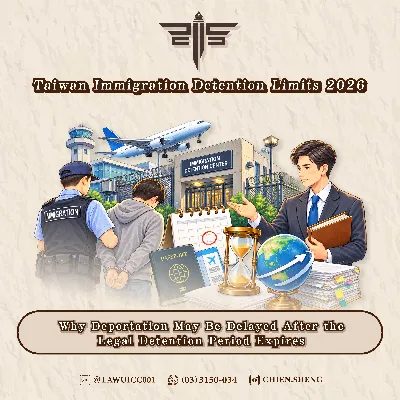 Taiwan Immigration Detention Limits 2026: Why Deportation May Be Delayed After the Legal Detention Period ExpiresWhy must Taiwan release some foreign nationals even when their deportation remains incomplete? Immigration detention is subject to statutory limits and constitutional protections. This guide explains the 100-day detention framework, separate rules for Mainland Chinese residents, common deportation delays, humanitarian safeguards, and alternatives to detention under Taiwanese law.刑事案件知識文 2026.10.19
 政府採購法洩密罪怎麼認定?工程圖說交付同業遭起訴,法院無罪判決與證據不足解析政府工程尚未公告招標,設計公司提供圖說給同業就構成洩密罪嗎?高雄地院一件無罪判決指出,交付光碟不等於交付採購機密,仍須證明資料內容具有應秘密性。本文解析未扣案物證、證人證詞、通訊監察譯文與刑事證據不足的法律關鍵。刑事案件知識文 2026.10.16